


Most BFSI institutions are digitally busy but strategically stuck.
Apps are faster. Dashboards are smarter. Processes are automated. Yet customers still feel friction, risks still surface late, and leaders still ask the same question:
Why are we investing so much in digital, yet struggling to see real business value?
The answer is uncomfortable but clear:
Digital transformation in BFSI fails when technology moves faster than vision and value is never clearly defined
In a sector built on trust, resilience, and regulation, digital success is not only about adopting more tools. It is more about aligning strategy, leadership, and execution around outcomes that matter.
That is where vision must finally meet value.
Digital transformation is the strategic integration of digital technologies such as AI, cloud computing, and IoT across all business areas, fundamentally targeting operational efficiency and customer value propositions in delivery. It requires the Leadership Commitment, Cultural Shift, Continuous Experimentation, End User Alignment of Technology, Processes, And People to Improve Efficiency, Agility, And Innovation. It is a strategic use of digital technologies to fundamentally change how an organization creates value, operates, and competes. It involves integrating digital technologies into products, processes, and business models to improve customer outcomes, increase efficiency, and build new sources of competitive advantage. It requires changes in mindset, culture, leadership, and decision-making, not just IT systems.
- It is not only about digitising what you do.
- It is about rethinking why and how you do it.
Technology enables transformation; leadership makes it real. It is not a one-time project but an ongoing process of re-inventing business models to remain competitive in a digital-first economy.
Key Aspects of Digital Transformation:
Core Drivers: The primary goals are to improve customer experience, enhance operational efficiency, boost profitability, and foster innovation.
Technologies Involved: Key technologies include AI, machine learning, the Internet of Things (IoT), cloud computing, and advanced data analytics.
Four Masts: Successful transformation relies on aligning Technology, Process, People, and Skills.
- Impact:It is reshaping sectors like banking (omnichannel, fintech), retail (personalized, checkout-free), manufacturing (smart factories), and healthcare (telemedicine).
- Implementation Phases:Processes often follow a journey from early-stage planning and testing to mid-stage definition, growth/scaling, and final maturity through constant, ongoing innovation.
Why Digital Transformation is Non-Negotiable in BFSI:
- Customer expectations shaped by Big Tech & FinTech (instant, personalized, frictionless)
- Cost pressure on legacy heavy operating models and their underlying support
- Regulatory intensity demanding transparency & resilience
- Data explosion enabling smarter decisions
- New competitors redefining value (neo-banks, Insurtech, BNPL players)
- The Onset of RegTech for Compliance
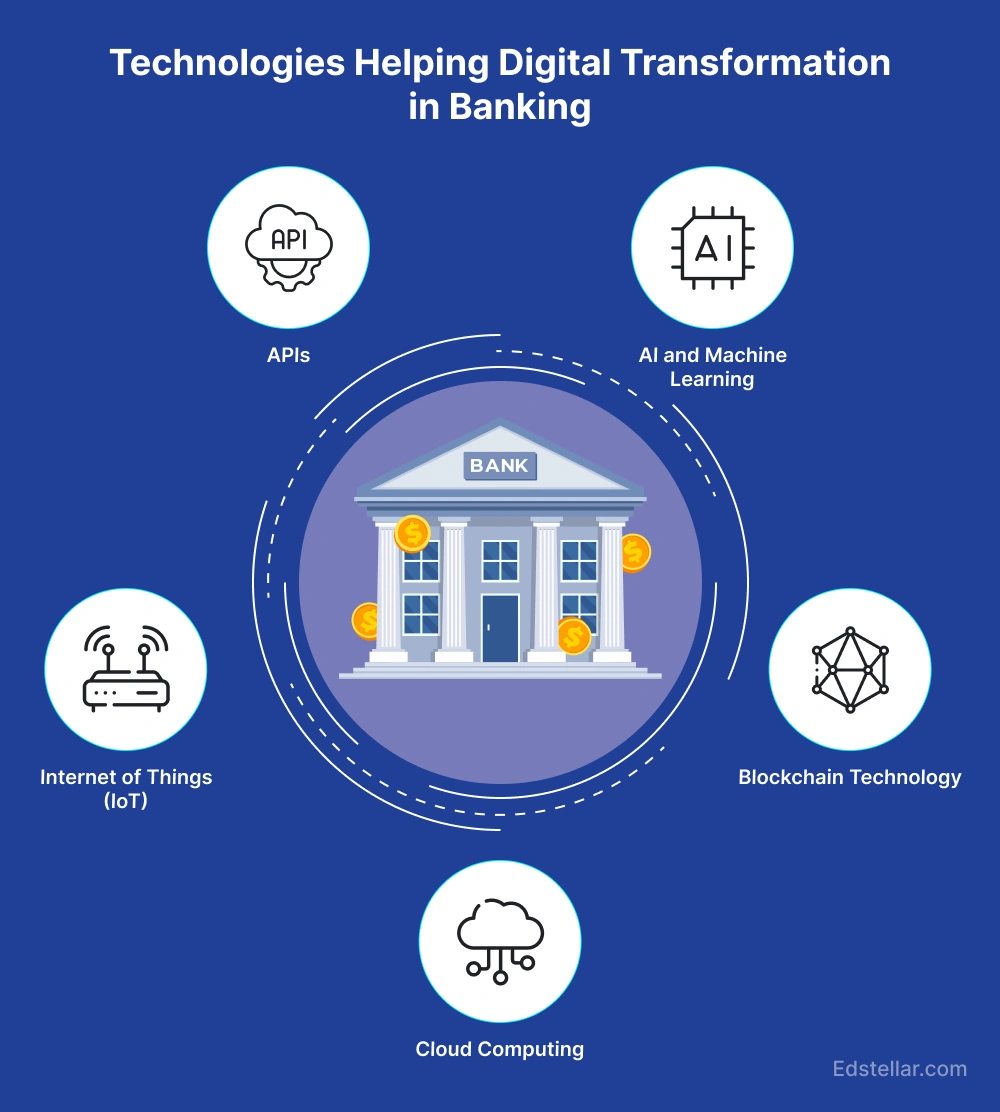
Critical Driving Factors for Digital Transformation in BFSI
- Customer Experience (CX) Re-engineering
- Omni-channel journeys (Branch ↔ Mobile ↔ Web ↔ Call Centre)
- Paperless onboarding (eKYC, video KYC)
- Hyper personalized offers using Analytics
- Self-service + Assisted Digital Models
The Shift: Product centric ➝ Customer-life-cycle-centric
- Data, AI & Advanced Analytics
- Credit Scoring Using Alternative Data
- Fraud Detection In Real Time
- Predictive Risk & Early Warning Systems
- Personalized Nudges & Financial Wellness Insights
The Shift: Historical Reporting ➝ Predictive & Prescriptive Intelligence
III. Cloud & Core Modernization
- Core Banking / Core Insurance Modernization
- Hybrid & Private Cloud Adoption – In case of Regulatory Fit
- Microservices & Api-First Architecture (Design and First Principles Thinking)
- Faster Product Launches (Weeks, Not Years)
The Shift: Agility without compromising stability
- Automation & Intelligent Operations
- RPA for back-office (reconciliations, claims, settlements)
- Straight-through processing (STP)
- AI-driven underwriting & claims assessment
- Reduced errors, faster TATs, lower cost-to-serve
The Shift: Manual Processing to Automated Intelligent Operations
- Cybersecurity & Digital Trust
- Zero-trust security models
- Behavioural Biometrics
- AI-Based Threat Detection
- Strong data privacy & consent management
The Shift: Trust is the real currency of BFSI
- Open Banking & Ecosystem Play
- API partnerships with FinTechs
- Co-Lending & Marketplace Models
- Embedded Finance (Banking Inside Non-Banking Journeys)
- Platform Thinking Vs Product Thinking
The Shift: Banks As Platforms, Not Just Product Factories
Digital Transformation Across BFSI Segments
Banking
- Digital-Only Accounts & Journeys
- AI-Powered Relationship Management
- Real-Time Payments & Liquidity Views
Financial Services
- Digital Lending & BNPL
- Wealthtech & Robo-Advisory
- Algorithmic Risk & Portfolio Optimization
Insurance
- Insurtech Integrations
- Usage-Based & Parametric Insurance
- AI-Driven Claims & Fraud Detection
Challenges and Success Factors:
Barriers: Major obstacles include cultural resistance, lack of executive sponsorship, legacy system constraints, and a shortage of digital skills.
Pitfalls: Treating transformation as IT projects, Digitizing bad processes instead of redesigning them, ignoring change management & capability building, Legacy mindset overpowering digital intent
Success Drivers: A clear “why” (business case), cross-functional alignment, and a culture that embraces change are crucial.
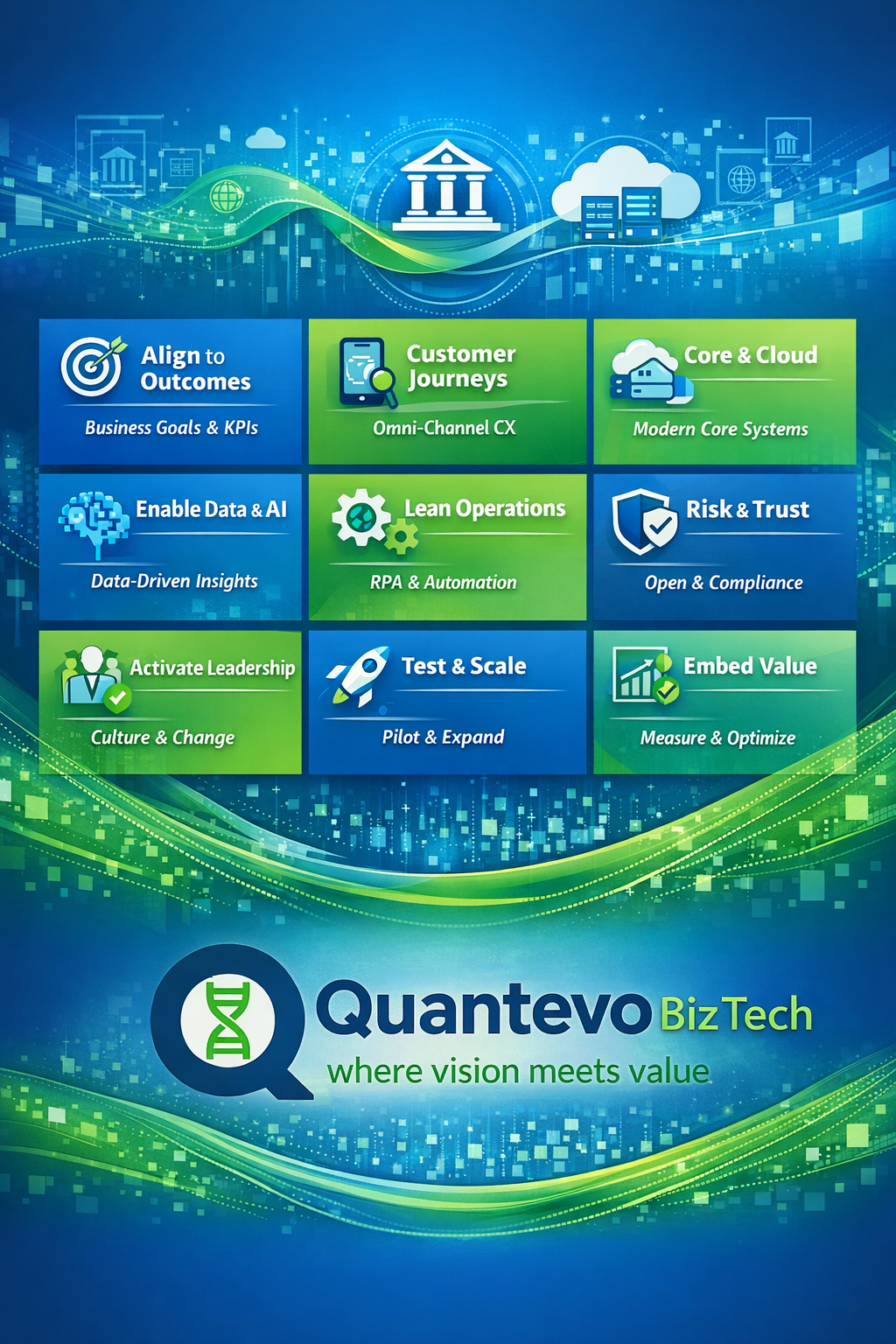
What Winning BFSI Organizations Do Differently
- Start With Business Outcomes, Not Tools
- Align Leadership, Culture & Incentives
- Invest In Digital + EI + Change Leadership
- Build Partner Ecosystems, Not Everything In-House
- Run Pilots → Scale Fast → Institutionalize Learning
A Leadership Lens (Critical Insight) – Digital Transformation Fails Not Due to Lack of Technology, But Due to Lack of Leadership Readiness, Focus and Commitment.